
The Evolution of the Heritage Overlay in Parkville and Melbourne

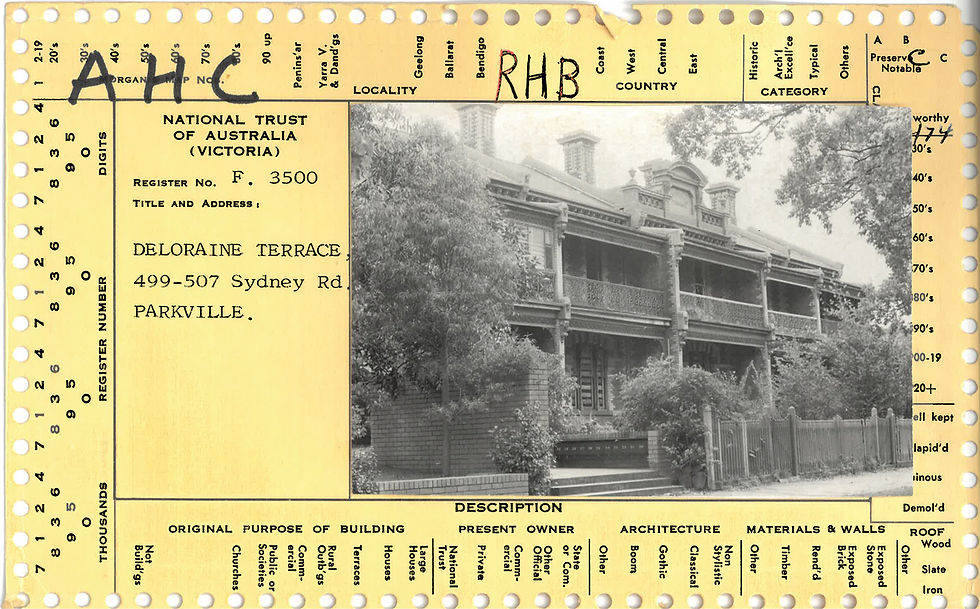
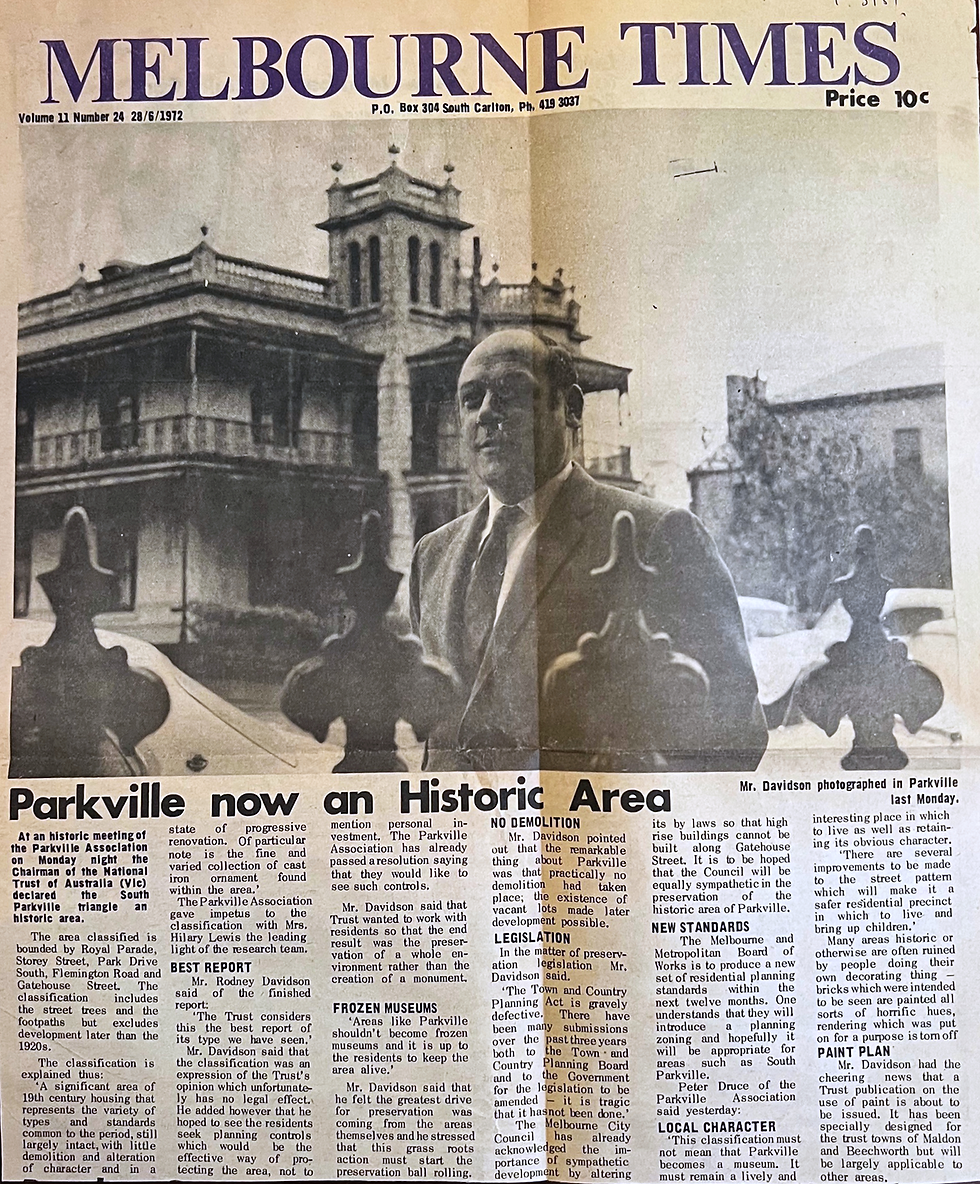
In 1972, the Victorian National Trust took an unprecedented step by designating South Parkville as Melbourne’s first urban conservation area. Prior to this, heritage listings primarily focused on monumental public buildings and individual grand residences. Recognising the collective significance of South Parkville’s intact nineteenth-century streetscapes and distinctive cast-iron verandas represented a fundamental shift in the recognition of heritage values.
This precinct-based approach acknowledged that a cohesive urban environment holds significance beyond its isolated structures. Rather than merely protecting single properties, authorities and conservationists began to understand the importance of spatial context and neighbourhood character. This methodology eventually became standard practice across Victoria, fundamentally altering how we assess and manage heritage-rich inner-city areas.

Community Influence on Planning Policy
The designation of South Parkville was not an isolated top-down decision. It was heavily driven by a community group, the newly formed Parkville Association. Homeowners and professionals advocated for the protection of their built environment against comprehensive post-war urban renewal. By collaborating directly with architects and planners, the community achieved the consensus required to bring area-based conservation to the forefront of the planning agenda.
This productive relationship between community groups and heritage experts demonstrated the critical role of stakeholder engagement in heritage planning. The Parkville model showed that grassroots advocacy, when paired with robust architectural and historical evidence, can successfully deter inappropriate redevelopment and positively shape long-term heritage outcomes.
Formalising Statutory Protections
While the initial National Trust designation provided a strong moral directive, it lacked legal weight. It was not until the mid-1980s that the City of Melbourne and the Victorian Government transitioned these informal classifications into statutory protections. The introduction of area-based planning controls required navigating nuanced debates around property rights, developmental constraints, and planning tools.
The interim protections in suburbs like Parkville eventually evolved into Victoria's current Heritage Overlay. Early 1970s and 1980s heritage studies informed the frameworks that we continue to use to guide residential adaptations and assess planning applications across Victoria.
What's next for Parkville?
Today, Parkville remains highly intact, a testament to half a century of targeted conservation. However, adapting places for the future requires us to look beyond the aesthetic preservation of nineteenth-century colonial architecture. Modern practice, including the recent Parkville Heritage Review, is starting to integrate more diverse narratives, including the area's ancient and continuing First Peoples heritage and the complex social history of the mid-twentieth century.
Achieving conservation alongside social diversity, housing, density, and climate resilience is the future. We see these issues canvassed in our work for the City of Melbourne Heritage Strategy. By applying a more inclusive and forward-looking approach to heritage, we can ensure that heritage suburbs like Parkville do not become static, but continue to function as living neighbourhoods that accommodate 21st-century needs.
At Heritage Workshop, we combine analytical rigour with strategic pragmatism to navigate heritage overlays including in Parkville and the City of Melbourne. To discuss how to unlock value and achieve exceptional outcomes for your next heritage project, contact Dr James Lesh and the team today.
This article is adapted from Founding Director Dr James Lesh's latest peer-reviewed paper, Monuments to precincts: the National Trust, the Parkville Association and the invention of local heritage in Parkville, Melbourne, 1950s–2020s, published in the scholarly journal Urban History. We encourage practitioners and researchers to access the full open-access academic article online via Cambridge University Press (DOI: 10.1017/S096392682610073X).


